


Heart Dropper Painting
- Ava Corrado
- Feb 9, 2025
- 2 min read

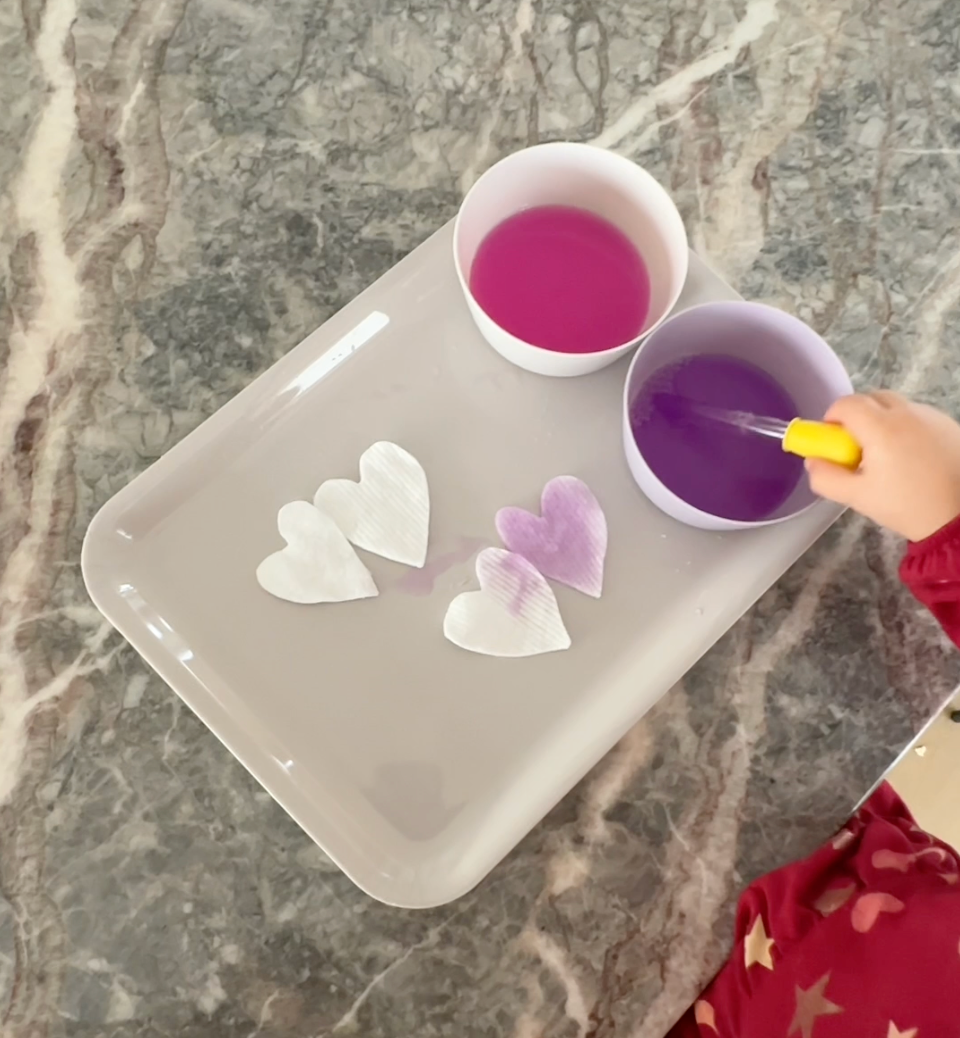
Our 2.5-year-old absolutely loves painting, so this paint dropper activity is the perfect way to blend creativity with fine motor skill development. Using the dropper helps strengthen those little hand muscles while keeping the fun going!
Quick tip: Less is more! As my elementary art teacher used to say, “A little dab will do ya!” Start with just a small amount of paint and water. If they use all the water, simply add more!
Learning moment: If the paint becomes too diluted and the colors aren’t as vibrant, turn it into a mini science lesson! Talk about what happens when you add more paint, and introduce words like "dilute" and "vibrant." It’s a great way to mix hands-on learning with play!

WHAT YOU WILL NEED:
-Dropper ( These or These are great)
HOW TO SET UP THE ACTIVITY:
-Cut cotton pads into heart shapes or leave as is
-Place cotton pads on a tray to contain the mess.
-Fill small containers with a drop of paint and mix with a small amount of water
Demonstrate & Encourage Exploration
-Show how to squeeze and release the dropper to pick up and drop liquid.
-Allow the child to freely explore adding colors to the cotton pads.
Extend the Learning
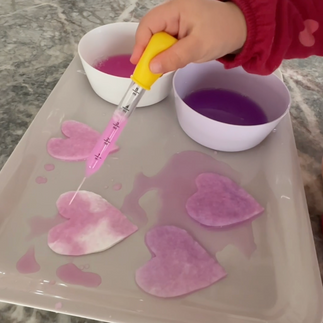
-Ask questions like, “What happens when you mix the two colors together?”



DEVELOPMENTAL BENEFITS:
Fine Motor & Hand-Eye Coordination
Strengthen hand and finger muscles by squeezing and releasing the dropper.
Improve hand-eye coordination by aiming and controlling paint drops.
Creativity & Artistic Exploration
Encourage self-expression through color choices and unique designs.
Explore color mixing by blending drops of different colors.
Early Science & STEM Skills
Introduce the concept of absorption by observing how the cotton pad soaks up liquid.
Foster experimentation with mixing colors to create new shades.
Cognitive & Problem-Solving Skills
Develop focus, patience, and an understanding of cause and effect.
Regulate the amount of liquid used to avoid oversaturation.
Language & Communication
Expand vocabulary with words like “squeeze,” “drip,” “absorb,” and “blend.”
Encourage following simple instructions (e.g., “Add three drops of blue”).


Comments